
 Maya Collins
A failed safety inspection in Ontario doesn’t mean the car has to be scrapped. It means you now have a list of defects to weigh against what the car is worth. Get the required repairs separated from the optional ones, price them, and then decide whether to fix, sell, or scrap.
Plenty of cars look fine in the driveway and still fail. Here’s how to read the result and make the call.
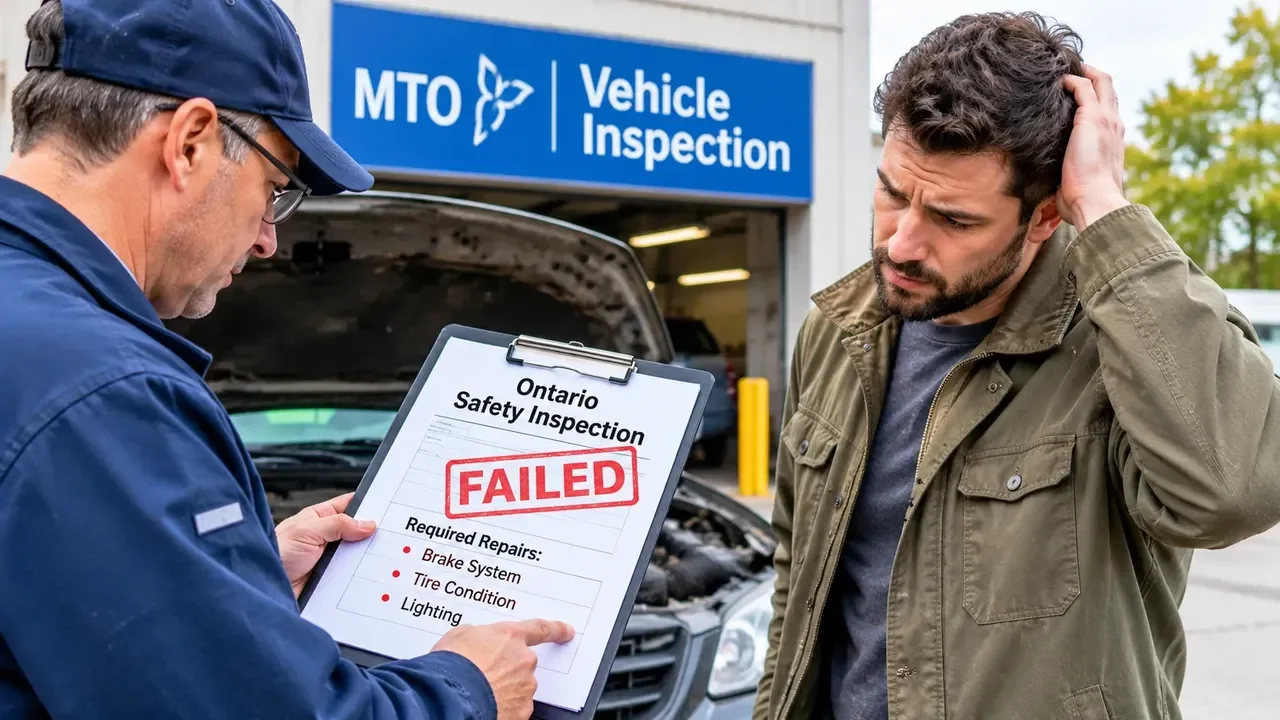
Diagnosis: What the Safety Standards Certificate Means
A Safety Standards Certificate (SSC) confirms a vehicle met Ontario’s minimum safety standards on the day it was inspected. It does not guarantee the car stays in that condition. If the vehicle fails, the inspection centre can’t issue the certificate until the required repairs are done and it passes.
You generally need an SSC to:
- Transfer a used vehicle to a new owner.
- Register a vehicle brought in from outside Ontario.
- Change a vehicle’s status from unfit to fit.
You can sometimes buy and register a vehicle without one, but you can’t put plates on it. The Government of Ontario’s SSC page lists the full requirements.
Common Reasons Cars Fail
| Area | Typical defects |
|---|---|
| Brakes | Worn pads, damaged rotors, leaking components |
| Suspension and steering | Worn joints, damaged parts, excessive play |
| Tires and wheels | Unsafe tread or visible damage |
| Lighting and electrical | Defective lights, wiring faults, non-working equipment |
| Structure | Rust or damage on key structural components |
Some failures are a quick fix. Others stack up, with several worn parts appearing at once.
Step-by-Step: Deciding Whether to Repair
Step 1: Get a written, itemized estimate
Ask the mechanic to split the estimate into two parts: repairs required to pass, and recommended maintenance. Don’t decide based on a vague total or a list you don’t understand.
Step 2: Compare repair cost with the car’s value
Check the realistic market value of the car in its current condition. As an illustration, a car worth $3,000 when roadworthy that needs $2,400 in required repairs, with more work likely soon, is a poor bet. Real costs and values vary by make, model, age, condition, and local market.
Step 3: Look past the inspection report
A car can pass and still have expensive problems coming. A slipping transmission, an engine burning oil, or widespread body corrosion all shorten how long you can keep it. Ask whether these repairs are the last big bill or the first of several.
Step 4: Price the alternative
Replacing the car means a purchase price, insurance, and setup costs. Repairing may still be cheaper. But if the car has become unreliable, more spending may only delay the same decision.
Tools for Pricing the Decision
Two free resources make the math concrete. Canadian Black Book’s online valuation gives a baseline trade-in and private-sale range; enter the exact trim, mileage, and condition rather than “good” by default. Then search comparable listings on AutoTrader.ca filtered to your region, year range, and similar kilometres. If your repair estimate is close to the low end of those numbers, lean toward selling or scrapping.
Selling or Scrapping a Car That Failed
A car that failed inspection can still have value from its condition, make, model, usable parts, and recyclable metal. Your options:
- Sell privately as-is. Disclose the failed inspection and state clearly that it’s sold unfit. The buyer will need to repair and certify it before plating it.
- Sell for parts. Useful when major components still work.
- Scrap it. Practical when repairs approach or exceed the car’s value, the car has heavy rust or structural damage, several major parts need work, or it has sat unused for a long time.
For private sales in Ontario, the seller provides a Used Vehicle Information Package, available from ServiceOntario. Review the province’s vehicle registration and transfer rules before handing anything over.
Costly Slip-Ups After a Failed Inspection
Approving every line on the estimate
Mixing required and optional work inflates the bill. Ask the shop to mark which items the inspection standard actually requires, and defer the rest if budget is tight.
Selling without disclosure
Hiding a failed inspection invites disputes. Put the inspection results and known problems in writing for the buyer.
Paperwork left unfinished
If the ownership transfer isn’t completed properly, you may stay tied to the vehicle. Confirm the required documents before pickup or sale.
Handover Checklist
- Remove personal items from the cabin, trunk, and glove box.
- Have the VIN, make, model, year, and a condition summary ready.
- Share the inspection report and any known mechanical issues.
- Arrange towing if the car can’t be driven.
- Confirm all transfer paperwork before the car leaves.
Quick Answers
- Can I sell a car that failed in Ontario? Yes, with full disclosure. The buyer needs an SSC before plating it.
- Should I fix an old car before selling? Not always. If repairs cost more than the value they add, sell as-is or scrap.