
 Maya Collins
Yes, EV drivers in Canada can earn money by charging at home, and it isn’t a scam. Aggregator companies pool home charging data and sell it as carbon credits to fuel producers under the federal Clean Fuel Regulations. One writer who tested a program received $300, then another $100.
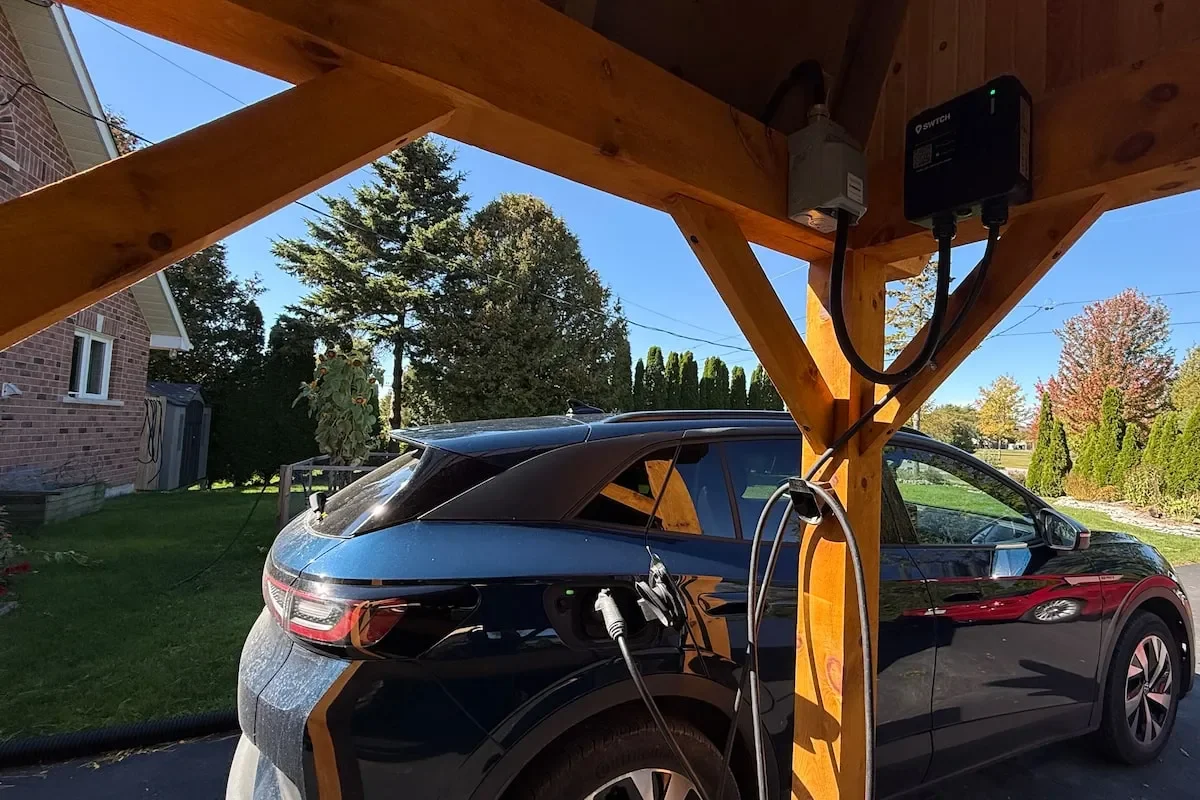
The offer first arrived as an email promising to pay more than the actual electricity cost. It sounded too good to be true. So the writer ordered a home charger, had it installed, and charged two EVs for a few months.
How the Money Is Generated
- The law creates demand. Greg Overmonds, vice-president of marketing at Swtch Energy, says the Clean Fuel Regulations require producers of carbon-intensive fuels to buy credits from cleaner energy sources.
- EVs create credits. Every kilowatt-hour that replaces gasoline generates clean credits.
- Aggregators bundle them. One home produces only a few credits a year. Oil companies need tens of thousands. A typical transaction pools 2,500 to 5,000 charging households.
- Drivers get paid. The aggregator shares the proceeds as rebates.
This market is unique to Canada. Most programs appeared recently, after organizers realized tracked, audited, and aggregated single-family homes qualified under the rules.
How the Programs Compare
| Company | How it pays | Notable feature |
|---|---|---|
| Grizzl-E | Up to 16 cents per kWh, tiered so heavier users earn more | Canadian-made metal charger boxes |
| Swtch | $300 after 1,500 kWh, then every $100 after that | Same payout anywhere in Canada |
| ChargeLab | Quarterly, no minimum | Works with chargers from other makers |
| Pion Power | Rebates on tracked charging | Charger can be scheduled for off-peak hours |
With some other systems, you schedule charging through the vehicle itself instead of the charger.
Why Province Matters
Swtch pays members the same everywhere but sells credits province by province. Credits from cleaner grids are worth more. Power from hydro, solar, wind, and nuclear in Quebec, Ontario, and British Columbia earns more than power in Alberta, where oil and oil sands dominate.
What One Driver Earns
Near Brighton, Ontario, overnight charging costs 3.9 cents per kWh. The aggregator pays 11 cents per kWh. Driving 20,000 km a year and charging at home over 90 percent of the time earns about $400 a year.
The credits barely dent oil companies’ costs. The carbon price isn’t high enough to change production. But the income helps households switch to EVs, which lowers oil demand over time.
Quick Checklist Before Signing Up
- Check whether the program needs its own charger or accepts yours.
- Compare payout thresholds, rates, and how often you’re paid.
- See whether you can schedule off-peak charging.
- Confirm how your charging data is tracked and audited.
Warning: earnings depend on how much you charge at home. Drivers who mostly use public chargers will earn far less than the example above.