
 Elliot Reed
A new car starts losing its showroom condition the day you drive it home, and the first few weeks decide how well it ages. Gravel chips the paint, sun bakes the dashboard, wet shoes soak the carpet, and a single parking-lot dispute can turn into an insurance headache. The good news is that a handful of well-chosen upgrades, plus a few simple habits, protect the car’s value, comfort and safety for years.
This guide maps the whole picture: what to protect first, how each upgrade fits your driving, and how to keep the car in shape long after the new-car smell fades.
In This Guide
- New Car Upgrades at a Glance
- Module 1: Protect the Exterior and Cabin Early
- Module 2: Add Comfort, Evidence and Roadside Readiness
- Module 3: Ownership Habits That Keep the Car Like New
- Frequently Asked Questions
New Car Upgrades at a Glance
Not every owner needs every item. Use this matrix to match upgrades to how and where you drive.
| Upgrade | What it protects | Best suited to | Watch out for |
|---|---|---|---|
| Paint protection film | Front bumper, hood, mirrors from stone chips | Highway commuters, gravel or winter-salt roads | Cheap film and poor installation can yellow or lift |
| Ceramic coating | Clear coat from bird droppings, sap and grime | Cars parked outdoors, owners who wash often | Not scratch-proof; still needs gentle washing |
| All-weather floor liners | Carpet and insulation from water, mud and spills | Families, pet owners, wet or snowy climates | Must fit exactly and never bunch under pedals |
| Seat covers and cargo liners | Upholstery from friction, dye transfer and pets | Kids, dogs, frequent passengers | Should not block side airbags in the seats |
| Ceramic window film | Interior from UV fading and heat | Hot, sunny regions; long outdoor parking | Check local legal tint limits |
| Dual-channel dash camera | You, with video evidence front and rear | Daily commuters, city drivers, rideshare | Respect local recording and privacy rules |
| Roadside kit | Your schedule, from flat tires and dead batteries | Everyone, especially rural and night drivers | Recharge the jump starter every few months |
Module 1: Protect the Exterior and Cabin Early
Here’s the real issue: modern factory paint uses waterborne formulas that are better for the environment but thinner and softer than older solvent-based finishes. That makes the first months the most valuable window for protection, before chips and stains settle in.
Two layers for the paint
Think of exterior protection as two jobs. Paint protection film is a clear urethane layer applied to the zones that face the road: bumper, hood edge, mirror caps and the front of the fenders. It absorbs gravel strikes so the paint underneath stays intact. That matters beyond looks, because a chip that reaches bare metal lets moisture and road salt start corrosion.
A ceramic coating handles the rest of the body. It creates a slick, water-repelling surface, so rain carries dirt away and bird droppings, bug splatter and tree sap struggle to bond. You still wash the car, but less aggressively, and you avoid much of the polishing older paint often needed.
Then the cabin
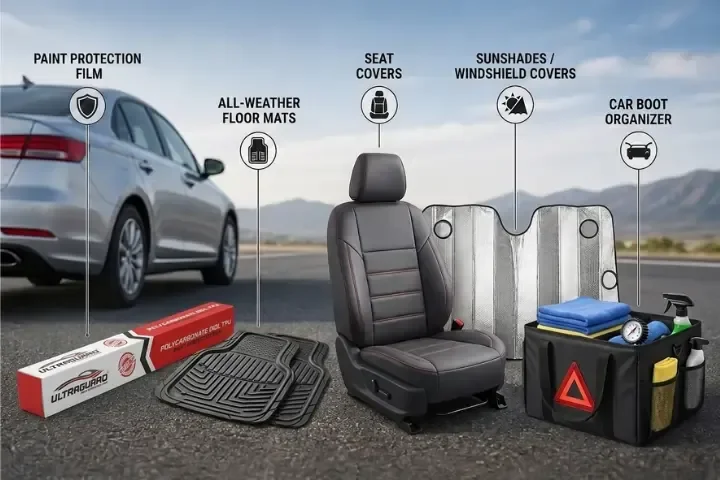
You spend every drive inside the car, so the interior wears fastest. Factory fabric mats soak up slush and spilled coffee and pass that moisture into the insulation below, which is where musty smells begin. Custom-fitted all-weather liners with raised edges contain the mess, and they rinse clean in minutes.
Seats come next. Tailored covers guard against denim dye, friction on side bolsters and food stains. Pet owners benefit from waterproof bench and cargo liners that stop hair, claws and muddy paws from reaching the upholstery. Simply put, a clean interior is one of the strongest signals of a well-kept car when you eventually sell.
Module 2: Add Comfort, Evidence and Roadside Readiness
Once the surfaces are protected, the next layer is about living with the car: heat, accountability and the occasional bad day on the road.
Control sun and heat
Large windshields, wide side glass and panoramic roofs let in a lot of sunlight. Over time, UV exposure dries leather, cracks vinyl and fades fabric, while heat stresses screens and trim. Quality ceramic window films block most UV and a large share of solar heat. The cabin cools faster, the air conditioning works less hard, and glare from low sun or bright headlights behind you becomes easier on the eyes. Just check your local tint rules before choosing a shade.
Record what happens
Even careful drivers meet aggressive motorists, disputed collisions and parking-lot hit-and-runs. A dual-channel dash camera records the road ahead and the traffic behind, giving insurers clear evidence when stories conflict. Look for a parking mode with low-battery protection. It wakes on impact or motion and records while you’re away, and a visible status light can discourage tampering.
Be ready for small emergencies
New cars are reliable, but tires still pick up nails and batteries still die. Many models skip a full spare in favour of a sealant canister. A sensible trunk kit includes a portable lithium jump starter with spark-proof clamps, a 12-volt tire inflator and a puncture plug kit, plus the basics recommended by public safety guidance such as water, a flashlight and a warm layer.
Module 3: Ownership Habits That Keep the Car Like New
But there’s a catch: gear only works if habits back it up. The owners whose cars still look sharp after five years usually follow a few routines without thinking about them.
- Clear the cabin every time you park at home. Cups, wrappers and bags create odours and stains. A small leak-proof bin in the back seat makes this easy.
- Keep documents organised. Registration, insurance card, roadside contacts and a tire gauge belong in one pouch you can reach quickly.
- Follow the break-in guidance. For roughly the first thousand miles, many manufacturers advise varying engine speed and avoiding sustained high revs, full-throttle launches and heavy towing. Your owner’s manual has the exact advice for your car.
- Wash gently and regularly. Coatings and films last longer with pH-neutral soap and soft mitts than with automatic brushes.
- Check tire pressure monthly. Correct pressure protects handling, braking and fuel economy.
Plan purchases in order of risk. If you drive long highway stretches, film comes first. If you park outdoors in strong sun, window film moves up the list. Families and pet owners get the most from liners and seat covers on day one. Most items are one-time costs, while the habits cost nothing.
Frequently Asked Questions
Do I need both paint protection film and a ceramic coating?
Not always. Film physically absorbs stone chips on high-impact areas, while a coating makes the whole body easier to clean. Highway drivers benefit most from film on the front end, often with a coating over the rest.
Will these upgrades affect my warranty?
Protective films, liners, covers and plug-in accessories generally don’t. Hard-wired electronics such as a dash camera should be installed properly, ideally by a professional, to avoid electrical issues. Check your warranty terms if unsure.
What should I buy first on a tight budget?
Start with all-weather floor liners and a basic roadside kit. They’re affordable, prevent the most common damage and stress, and you can add film, tint or a dash camera later.